Connected histories do not mean the same tradition.
When unfamiliar spiritual words appear online, they can be treated as though they all mean one thing. A better place to begin is to ask which tradition, community and history is actually being discussed.
Orisha: relationships with divine beings
Orisha is a Yoruba term for divine or spirit beings. Orisha-centred traditions include reciprocal relationships expressed through devotion and communal life. The related term oricha is used in Cuban Lucumí, a Yoruba-inspired tradition. These are religious relationships, not simply decorative symbols or a generic label for magic. [1]
Ifá: a body of knowledge and a divination system
UNESCO describes Ifá as a divination system practised in Yoruba communities and across the African diaspora. Its literary corpus is organised into 256 odù, with verses interpreted by trained diviners. This is more specific than calling any intuitive reading “Ifá”. A modern oracle card, a personal feeling and a formal Ifá consultation should not be presented as interchangeable. [2]
Haitian Vodou: a distinct living religion
Haitian Vodou developed through the meeting of African traditions, including Fon, Yoruba and Kongo, with French Catholicism. Its practitioners serve spirits known as lwa. There are historical connections with other African-diasporic traditions, but calling everything “voodoo” erases important differences. Here we use Vodou when discussing the Haitian tradition. [3]
The distinction is not “one is good and the other is bad”. Understanding a tradition means taking its own language, practices and communities seriously. This introduction is a starting point, not initiation, religious certification or a replacement for learning from knowledgeable practitioners.
More than a frightening word in a headline.
The Smithsonian’s account of Vodou describes how colonial and popular-media portrayals have reduced it to witchcraft and magic, obscuring its religious, cultural and social dimensions. We do not need to share a belief to describe it accurately and respectfully. [4]
That matters when talking about public figures, too. Jewellery, colours or a short video are not enough for this magazine to determine someone’s religion, initiation or intentions. A claim about a person needs evidence; a tradition should not be put on trial through gossip.
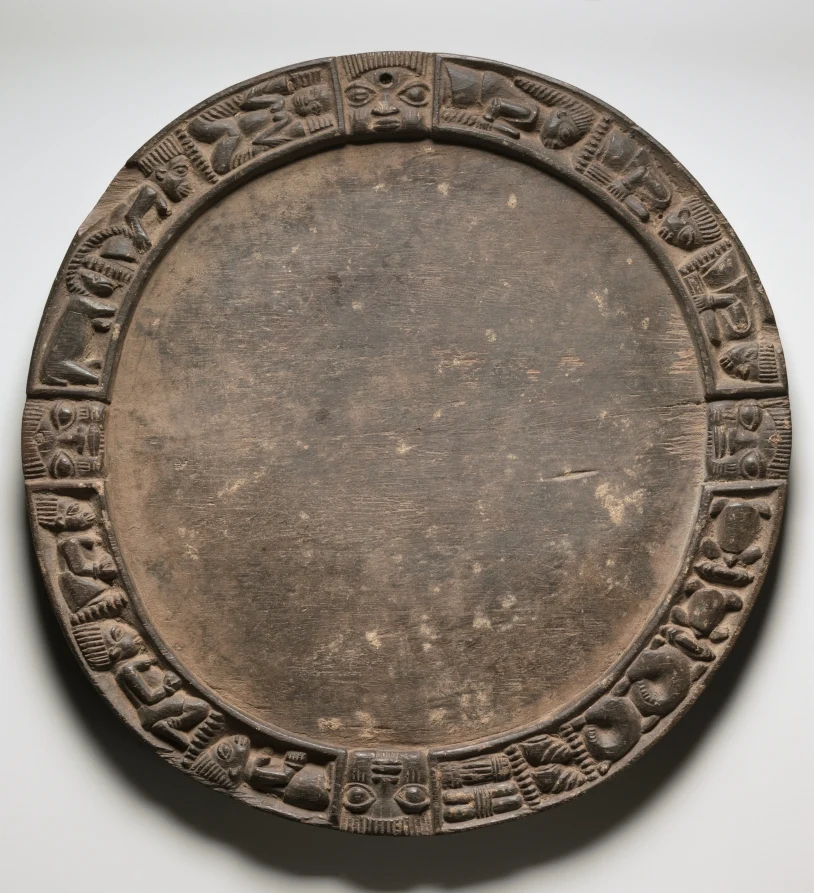
The carved tray pictured here gives one material point of entry. The museum identifies it as an Ifá divination tray from Nigeria and describes the four faces on its border as representing Esu. An object label is useful context—not the whole knowledge of a living community. [5]
At your own crossroads.
Choose a question and take it to your own journal. These are original reflection prompts, not traditional Ifá verses or a divination reading. There is nothing to submit on this page.
What am I ready to leave behind?
Name one habit, expectation or commitment you want to reconsider. What boundary would help you make that change without putting yourself or someone else at risk?
What do I want to carry forward?
Think of a value, memory or lesson that matters to you. How could it shape a decision you are making now?
What is one step I can actually take?
Choose something within your control: ask a question, make a plan, rest, create, or seek support. It does not have to solve everything today.
The space for Elegua’s Crossroads.
This is the magazine’s home for spiritual learning, culture and reflection. Farrah’s Elegua’s Crossroads ideas belong alongside that conversation, while clearly separating personal creative inspiration from formal religious teaching.
A candle, journal or reading is an optional offering—not a condition of learning here. This page is not a shop or booking form, and it makes no promise of a spiritual result. Spiritual reflection also does not replace qualified practical support when that is needed.
Sources & image credit
Published 8 October 2026. These sources support the introductory descriptions above; beliefs are described as beliefs, not scientific claims.
- Harvard’s Pluralism Project: Orisha and Lucumí.
- UNESCO Intangible Cultural Heritage: Ifa divination system.
- Harvard’s Pluralism Project: Haitian Vodou and Vodou, Serving the Spirits.
- Smithsonian Folklife Festival, Gerdes Fleurant: Vodou.
- Cleveland Museum of Art: Divination Tray (ọpọ́n Ifá), 1993.235. Nigeria, Yorùbá-style maker; wood; dated “1900s”. Gift of Drs. James and Gladys Strain. Image supplied through the museum’s Open Access programme, CC0. Resized and converted to WebP; no endorsement implied.