A future does not always begin with a job title
In Money Without Shame, Farrah describes already having a plan while the systems around her were focused on appointments, immediate tasks and the next box to tick. The work she was putting into books, self-employment and learning was part of that plan—not a substitute for having one.
“My books, my self-employment, my learning and my work towards a career are not evidence of laziness. Thinking outside the box does not mean having no ambition.”Farrah Thomas · Money Without Shame, October edition
That is the starting point for AT THE CODE. The projects connect to things Farrah cares about: making something from an idea, helping people express what is happening to them, creating opportunities and keeping ownership of the work. The range is broad because the life behind it is broad.
This is not a claim that every idea has already become a finished business. It is a record of building towards one. A book can be ready for readers while an app still needs testing. A live page can exist before every feature behind it is ready. Both progress and unfinished work belong in the story.
Cook-Off: creativity has a place here too
Recipe Builder · Early-access projectCook-Off belongs at the centre of this feature, not as an afterthought. It is part of AT THE CODE Recipe Builder: a project built around taking a food idea, developing different directions and deciding what is worth trying in a real kitchen.
The Cook-Off idea is simple. Give two independent AI models the same brief. Compare the recipe concepts as Model A and Model B. Judge the idea before judging the label, choose a direction, then work on it. The person creating the food stays the decision-maker.
One brief. Two directions.
Saltfish Crown Bite
Saltfish and callaloo in a crown-edged plantain shell, with a guava-lime dip.
Oxtail Crown Bite
Reduced oxtail in a plantain shell, with a dark-fruit finishing glaze.
The interesting part is not simply asking an AI for dinner. It is comparing alternatives: which version fits the ingredients, the occasion, the effort and the creator’s own taste? A winning concept still needs cooking. What held together? What took too long? What would change in the next batch?
Recipe Builder’s wider direction brings those stages together: create, test, improve and think about presentation. Optional heritage and inspiration choices let a food idea connect to the person making it, rather than treating every brief as interchangeable.
Cook-Off is being developed in public. Check the app’s current access information. This article introduces the project; it is not an announcement that every planned feature or later repair is already available.
Different projects, connected purposes
HEARD: make space for what someone is carrying
HEARD starts with a different kind of raw material: the things a person needs to get off their chest. The project’s purpose is to help someone express what happened, identify the main issue and think about possible next steps. Privacy is a central design priority. That is a product aim, not a reason to promise more than the finished system can demonstrate.
Build It Live: make room for creators
Build It Live is Farrah’s creator-platform project. The ambition brings creating, broadcasting, sharing work and earning from it into the same conversation. The magazine can document that development without presenting every planned broadcasting or earning feature as already open to the public.
The Signal: a home for the conversation
The Signal is the magazine you are reading. It gives the wider work a place to be explained: culture alongside real life, family alongside money, and ideas alongside the systems people have to navigate. The domestic-abuse discussion game is one interactive feature inside that broader publication—not its entire identity.
The connection between the projects is not that everybody must use all of them. A reader might arrive for a culture story, a home cook for Cook-Off, or someone under pressure for the book. Each should have a clear reason to stay.
The work behind “I built an app”
A convincing first screen is only part of the job. Readers need a way back from an article. A book cover must not obscure its description on a phone. A saved project must still be there when someone returns. A payment button needs a real delivery process behind it.
Those details are not glamorous, but they are the difference between showing an idea and making it useful. Farrah has challenged the work when pages looked squashed, pictures were missing or a design did not explain the product. The aim is not to pretend those problems never happened. It is to resolve them and learn from them.
For this magazine, “built in public” means showing the purpose, the choices and the unfinished work honestly. A test version should be called a test version. A plan should be called a plan. Readers should not have to guess which is which.
A person can be building towards independence before the result looks like a finished career.
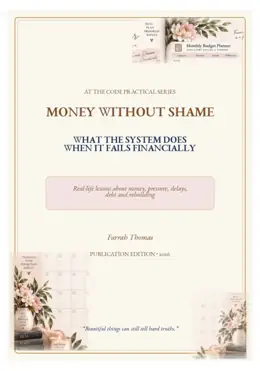
The story behind the work
Money Without Shame explores the financial pressure, delays and rebuilding behind this journey. The October edition includes the Universal Credit update, Farrah’s account of securing a safer home, and the ongoing Stage 2 complaint.
101-page PDF + companion planner · £9.99 one-off.