You do not always need an audience
The meeting ends, but the frustration comes home with you. Another bill arrives. You explain your circumstances again and still feel unheard. What you want to say does not fit neatly into a box asking for a brief description.
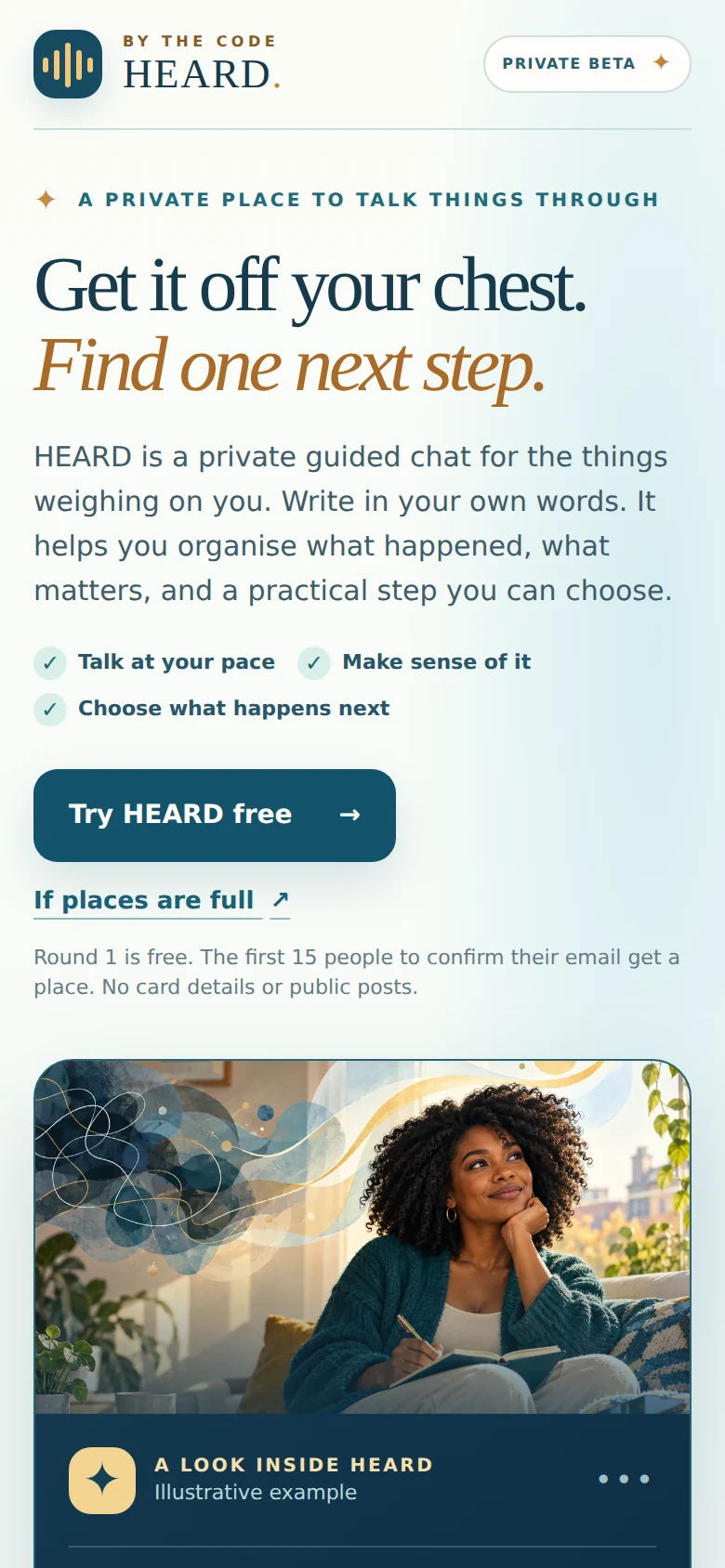
That is the kind of moment HEARD is built around. Not a performance. Not a public feed. A space where an adult can get the words out, look at what is underneath them and consider what to do next.
In HEARD’s founder statement, Farrah describes wanting an alternative to venting on social media when someone does not have a person they feel ready to talk to. Her concern is that an angry or overwhelmed moment can become the part of someone’s life other people keep replaying.
“One bad moment online should not define your whole life.”Farrah Thomas · HEARD’s founder statement
The aim is not to tell people to be quiet or to make a justified complaint disappear. It is to offer somewhere to start before deciding what needs to be said, to whom, and with what support.
From “I’m fed up” to “This is what matters”
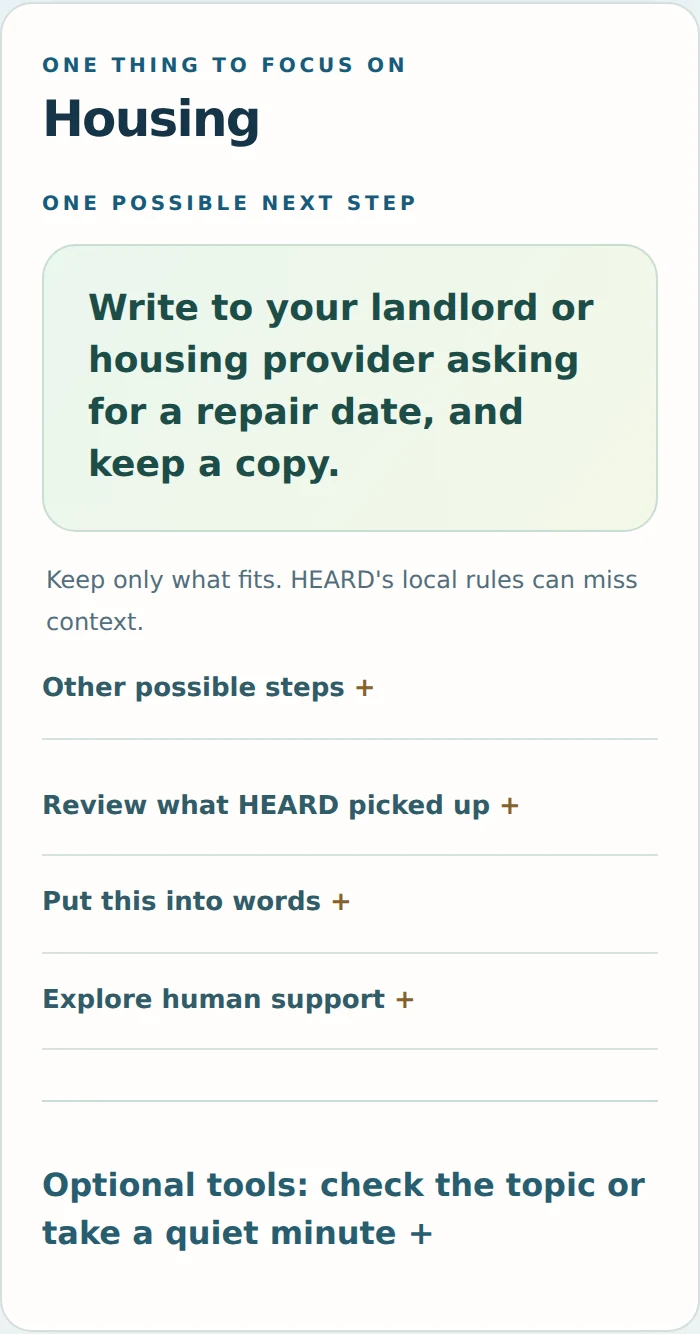
HEARD’s intended journey is simple: say what happened, identify what matters, and consider a manageable next step. Here is a fictional example of that idea.
Written for this article—not a real person’s conversation, an app screenshot or output from a live AI session. Open each panel to explore the example. Nothing needs to be typed or submitted.
“I’ve explained my circumstances three times and still feel ignored. Another appointment has changed, and I’m losing time I need for work.”
01 · What happened?
The appointment changed after repeated explanations. The person feels their circumstances have not been understood.
02 · What matters most?
Accurate information, a workable appointment and protecting time for work—not simply being told to calm down.
03 · One possible next step
Write a short factual note: what changed, what is inaccurate and what correction is being requested. Keep a copy. The person can decide when to send it or whether to ask someone they trust to help.
One possible way of organising the example, not a determination that an organisation acted unlawfully. The magazine has no private-chat form or embedded HEARD session. Use the separate beta access page to enter the app.
A useful reflection should leave room to say, “No, that is not what I meant.” The aim is to help a person organise their own account, not replace their judgement with a confident-sounding answer.
More than “just calm down”
HEARD brings together guided reflection and tools for organising a problem. Its broader Studio includes check-ins, journaling, visual boards and planning. Someone might want a quiet pause; someone else might want to get a practical task onto a page. Those should be choices, not a condition of being taken seriously.
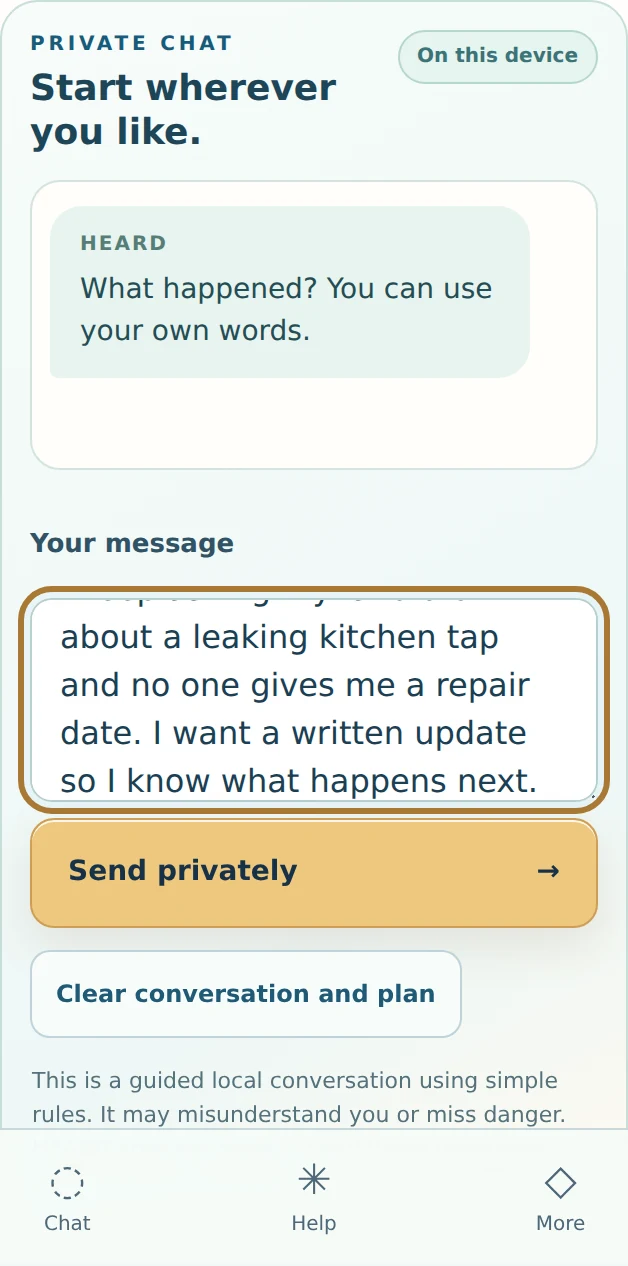
The current beta uses guided text and on-device tools. That is different from an unrestricted, natural-conversation service. Optional local voice depends on browser and device support; a beta place is not a promise of a working voice call on every phone.
A reflection tool, not a professional verdict
HEARD is not therapy, a diagnostic service, legal advice or an emergency service. It cannot reliably assess danger, monitor someone’s wellbeing or send emergency help. Human support should remain an option in its own right.
Privacy has to mean more than a slogan
Privacy is central to Farrah’s brief for HEARD. The beta’s local-first approach keeps the core written reflection on the person’s device, rather than automatically publishing it or sending it into an external conversation.
There are important limits. An optional feedback form or referral is a different action from private writing. Saving on a device is not the same as having a recoverable backup, and clearing a page is not a promise to erase every possible device copy. Read the app’s privacy notice before entering personal information.
For this magazine feature, the boundary is straightforward: the example is fictional and read-only. There is no request for your story, no microphone access and no personal conversation to upload.
Round 1 is open. Small first.
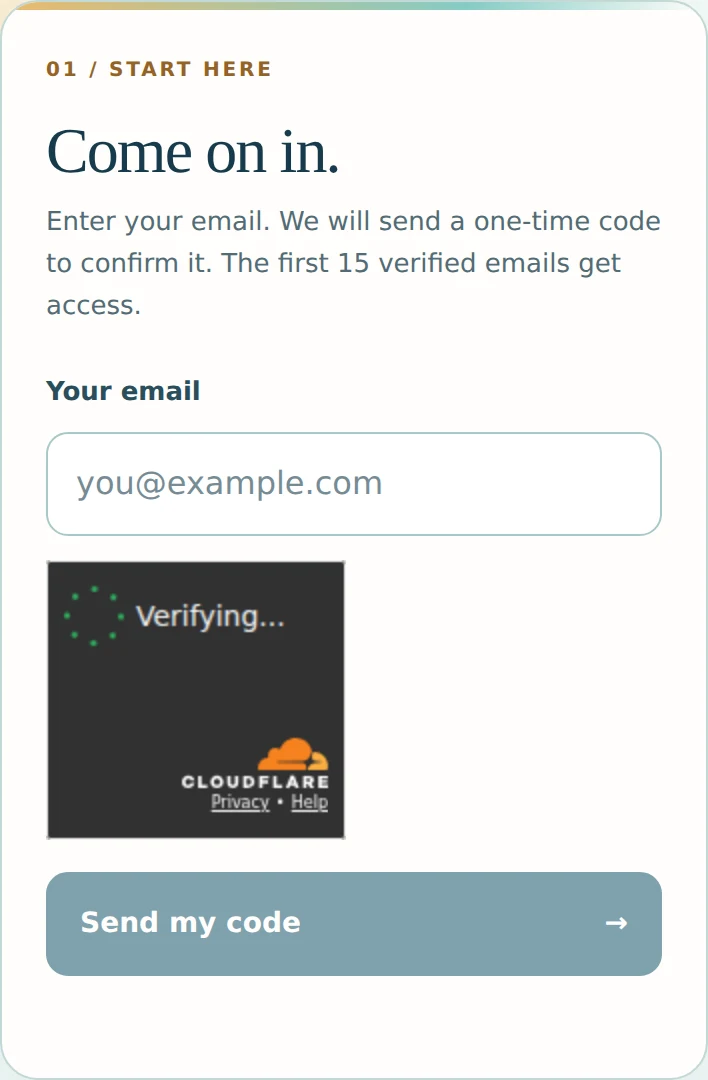
HEARD’s controlled first beta is open, capped at 15 testers with limited use and structured feedback. Open the beta page for current availability, email sign-in and the waitlist.
Follow the email-verification steps there to request an available place. Reading this article does not reserve a place. The free controlled beta is separate from a wider paid public release; this magazine update does not change the cap, allowances or payment settings.
A book can tell one story. A tool can make room for another.
Money Without Shame tells Farrah’s account of financial pressure, delays and building towards independence. HEARD is a separate tool for helping people organise what they are experiencing in their own lives.
You do not need to buy the book to read this feature, apply for the free beta or ask for support. The connection is the purpose behind the work—not a requirement to buy one thing to use another.
Read the story behind the work
Money Without Shame by Farrah Thomas. The October edition brings together the lived-experience book and its companion planner.
101-page PDF · £9.99 one-off. Start with the free selected-page preview.
When support is urgent: do not wait for HEARD or a beta place. In immediate danger, contact your local emergency service. HEARD and this magazine are not monitored support channels.